
Case Study
A UX concept redesign that encourages more thoughtful networking by introducing a required message step with optional AI support when sending connection requests.
Personal Project
Company
1 week
Duration
Ottawa
Location
Overview
Meaningful Connections by Design
AI-Assisted UX
Concept Case Study
UX Designer
From Passive Clicks to Intentional Connections
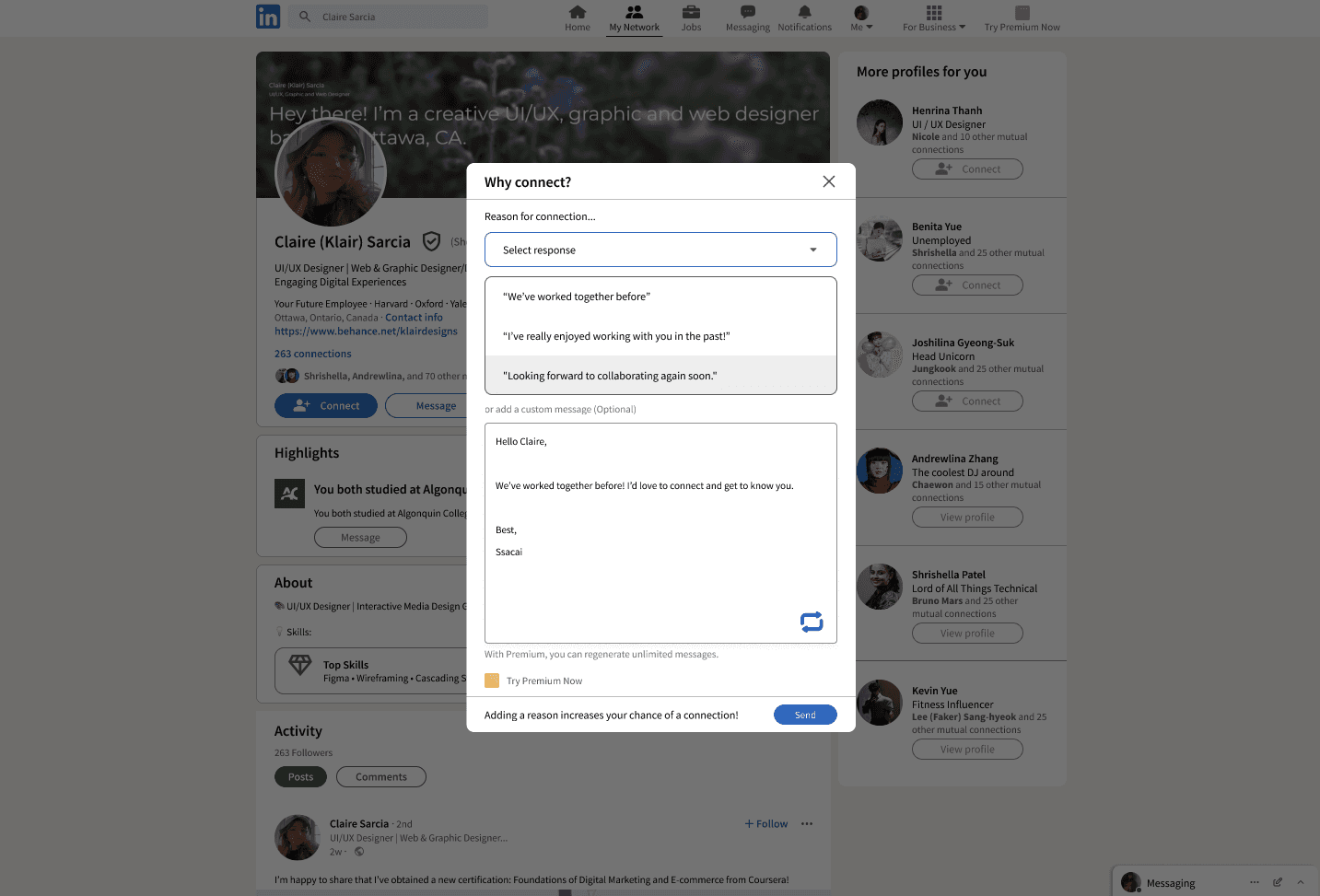
LinkedIn connection requests are one of the most common actions on the platform—yet most are sent without context. As a result, many invitations feel impersonal, awkward, or easy to ignore.
This case study explores how a small but intentional UX change—a required message step—can shift behavior toward more meaningful professional networking. The solution introduces optional AI-generated message suggestions while respecting user tone, control, and LinkedIn’s existing Premium model.
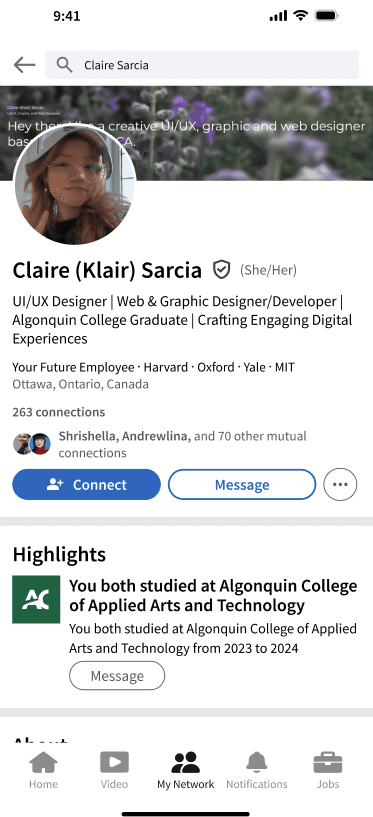
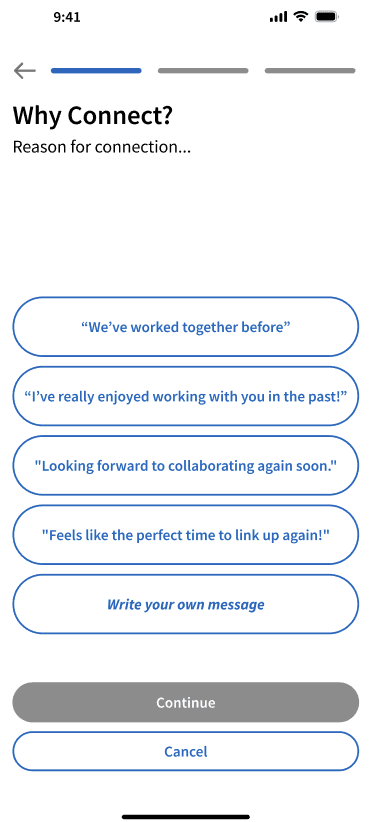
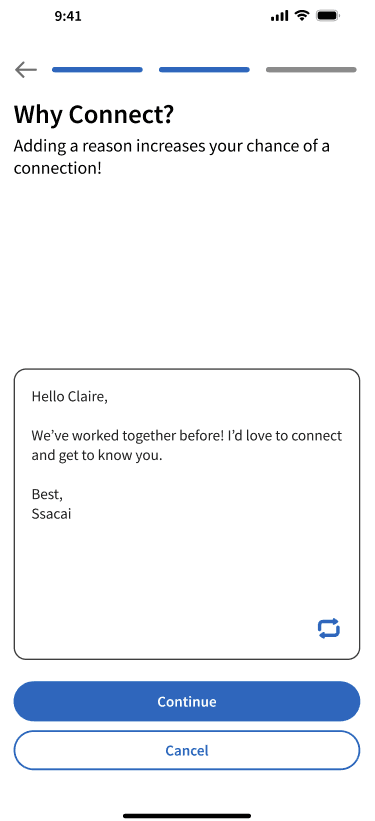
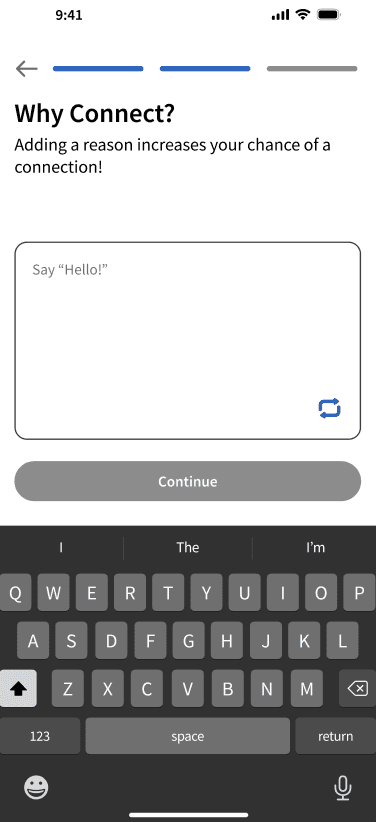
Understanding User Behavior Before Designing Change
This concept was grounded in the idea that meaningful professional networking is a behavioral challenge, not a feature gap. While LinkedIn provides tools for connection and messaging, the experience heavily optimizes for speed—often at the expense of intention.
Research focused on understanding why users skip personalization, how interface cues influence behavior, and where light guidance could encourage better outcomes without adding friction. Rather than assuming users don’t care, the goal was to uncover what prevents them from acting on good intent during high-frequency actions like sending connection requests.
To do this, research combined:
Qualitative insights into user motivation and hesitation
Quantitative signals from surveys and usability testing
Pattern analysis from adjacent platforms and outreach tools
This approach ensured design decisions were informed by how people actually behave under time pressure, not idealized workflows.
User Research — What People Actually Do
Using Typeform surveys and interviews, users shared that:
Writing a message often feels awkward or time-consuming
Many users skip messaging unless the interface strongly suggests it
Users want help getting started—but don’t want messages written for them
A key insight emerged: intent exists, but motivation drops without a prompt.
Usability Testing — How Flow Impacts Behavior
Maze usability tests were conducted to compare different connection flows:
Immediate message prompts vs optional steps
AI suggestions visible vs hidden
Required vs skippable message entry
Testing revealed that placement and timing mattered more than feature complexity.
Designing the Nudge
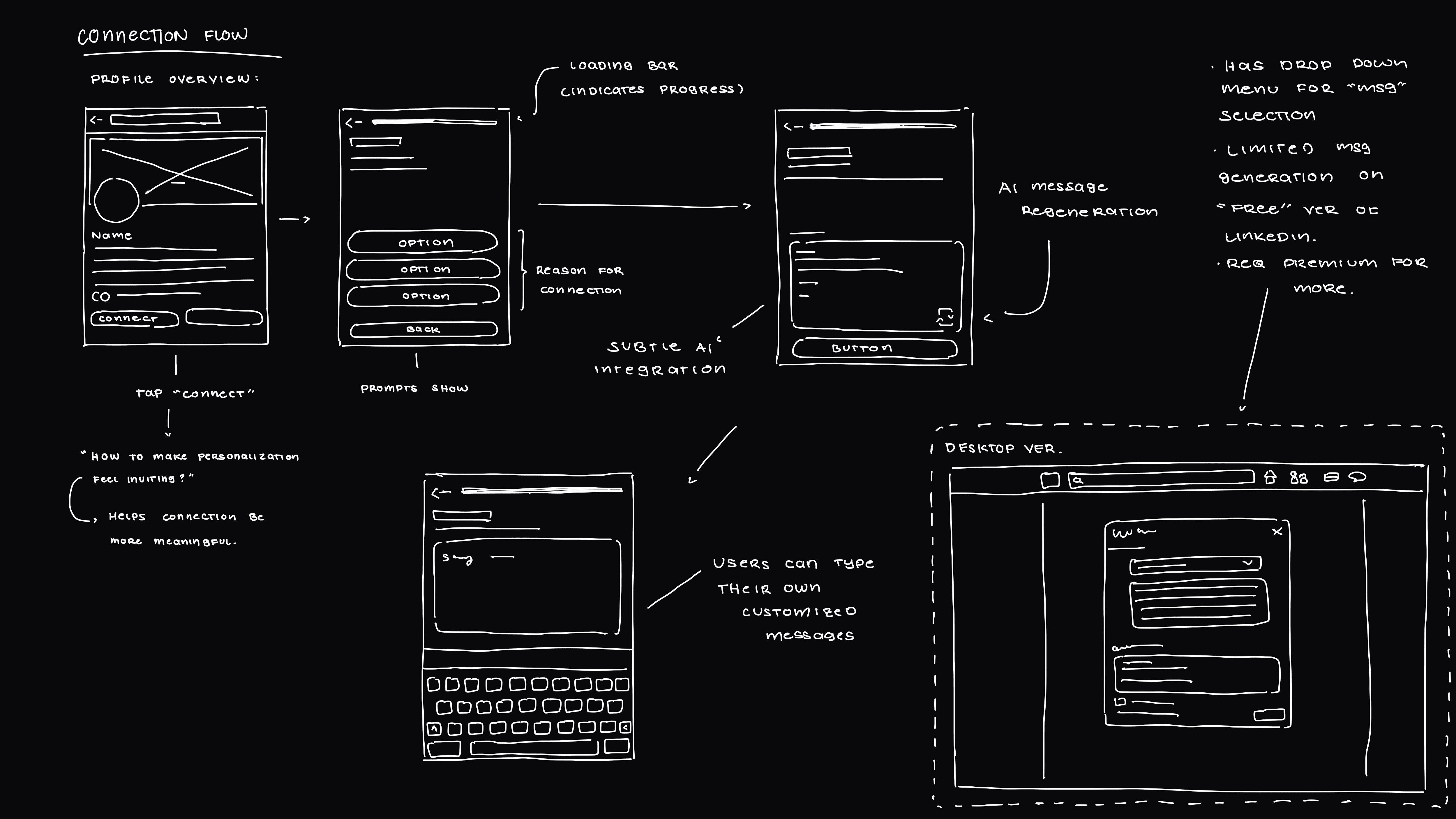
Lo-Fi Wireframes — Flow Before Features
Explored where the message step should live in the connection flow
Tested required vs optional message entry
Mapped how users move between “Connect,” message entry, and send
The goal was to introduce intention without disrupting momentum.
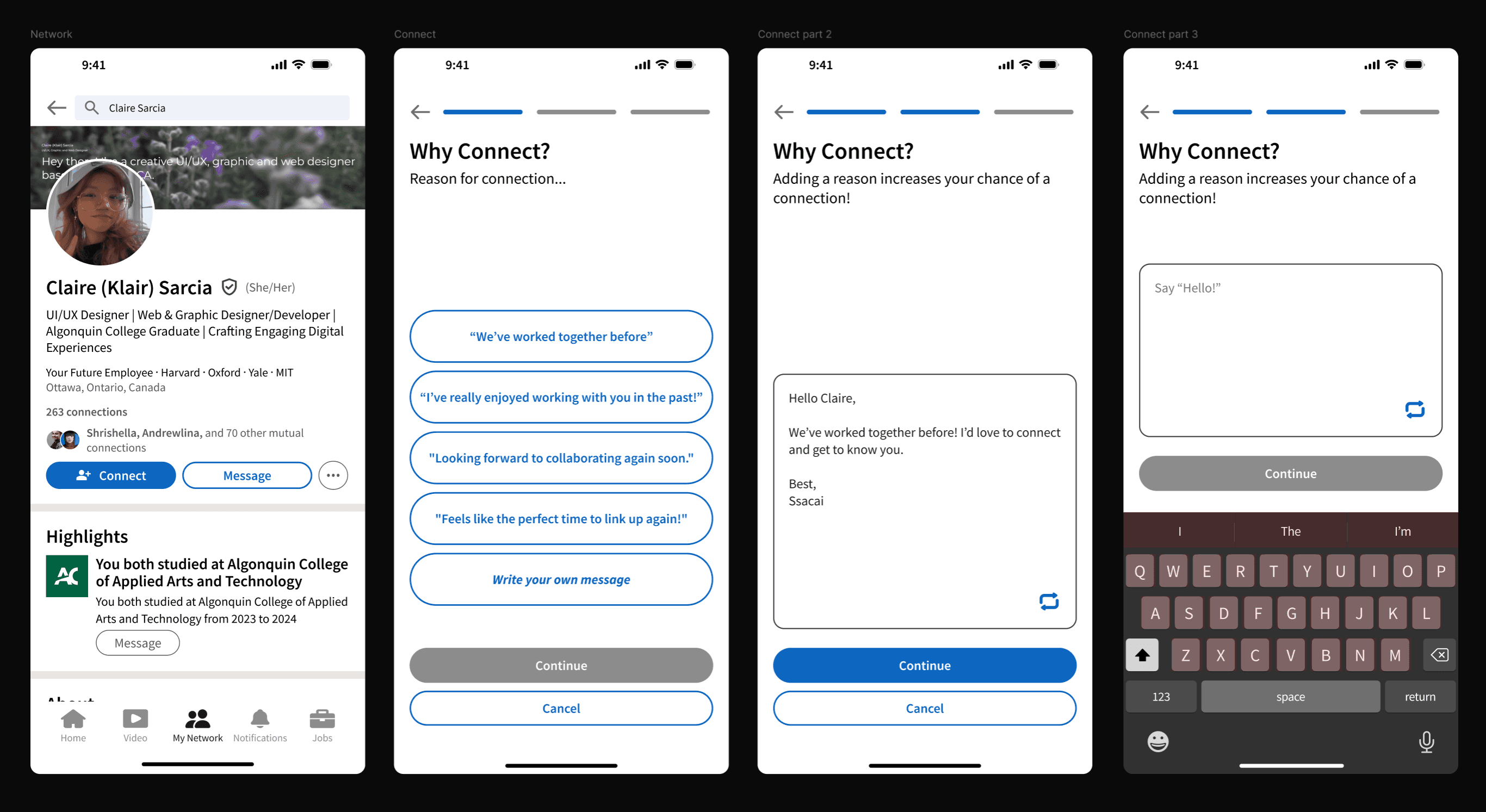
Hi-Fi Exploration — Reducing Awkwardness Through Design
Message field placed immediately after tapping “Connect”
Clear primary action with optional AI support
Visual hierarchy designed to feel helpful, not demanding
This stage focused on tone—making the prompt feel like an invitation, not a barrier.
Measured Through Research and Testing
At a Glance
2 platforms designed for (mobile + desktop)
2 user types supported (Free vs Premium)
Multiple flow variations tested via Maze
Survey + usability testing used to validate decisions
Key Research Metrics
72% of survey respondents said they usually skip writing a message unless prompted
Users were more likely to complete the flow when the message field appeared immediately after “Connect”
Maze testing showed higher completion rates when AI suggestions were visible but optional
Free users accepted limited AI usage when positioned around productivity rather than restriction
Insight
Users skip messages
Messaging feels awkward
AI feels intrusive
Premium value unclear
Design Decision
Required message step
Inline, immediate prompt
Optional AI assistance
Unlimited AI generations
Outcome
Increased intentionality
Reduced friction
Higher acceptance
Clear differentiation
Final Outcome & Reflection
Designing for Better Conversations
This concept redesign demonstrates how small UX interventions can meaningfully shift user behavior at scale. By reframing connection requests as moments of intention—not just clicks—the experience encourages more genuine professional interactions.
What Could Be Improved
With additional time and live data, future iterations could explore:
Post-connection follow-up prompts
Smart reminders for unanswered invites
Deeper tone customization for AI suggestions
AI should help people sound more like themselves—not replace them.
All right reserved © 2025